
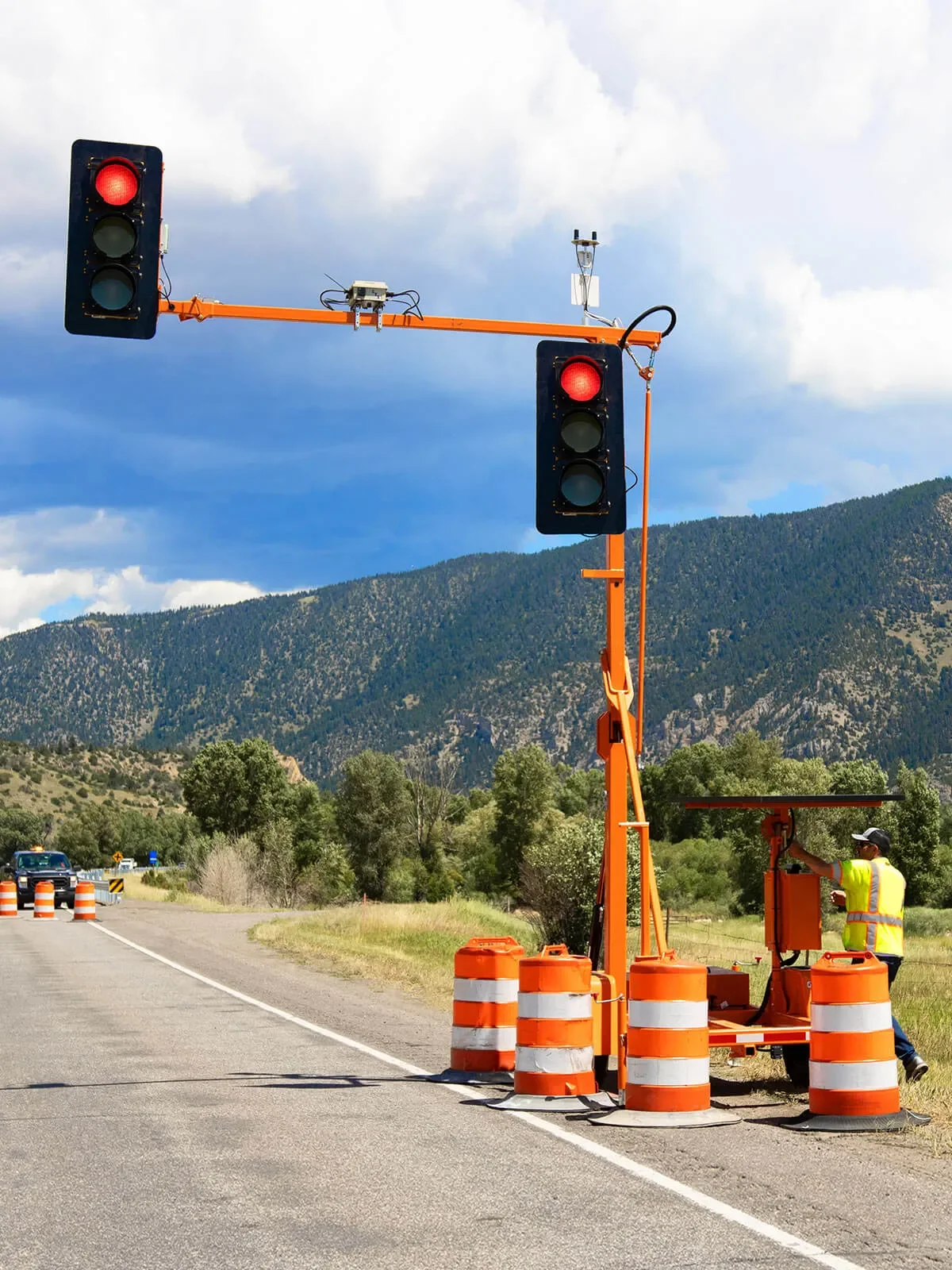
Best Uses
One-lane road closures: Control traffic when one lane is closed for construction.
Bridge and culvert projects: Safely manage alternating traffic across narrow work zones.
Road resurfacing: Direct vehicles around paving, milling, or maintenance operations.
Utility work: Manage traffic around underground water, sewer, electrical, or telecommunications projects.
Intersection construction: Temporarily control traffic when normal signals are affected by construction.
Long-term work zones: Useful when construction lasts several days or weeks, and a temporary traffic-control system is needed.
Mobile construction operations: Can be moved as the work zone progresses.
Benefits
Improved Safety: Provides clear stop-and-go instructions that are familiar to civilians, protecting both construction workers and drivers.
Better Traffic Flow: Controls traffic efficiently through areas where lanes are closed, helping reduce congestion and delays.
Reduced Need for Flaggers: Automates traffic control, reducing the number of workers needed to stand near moving vehicles.
Flexible: Can be moved and adjusted as construction zones change.
Consistent Traffic Control: Provides reliable signal timing, making traffic movement more predictable and organized.