
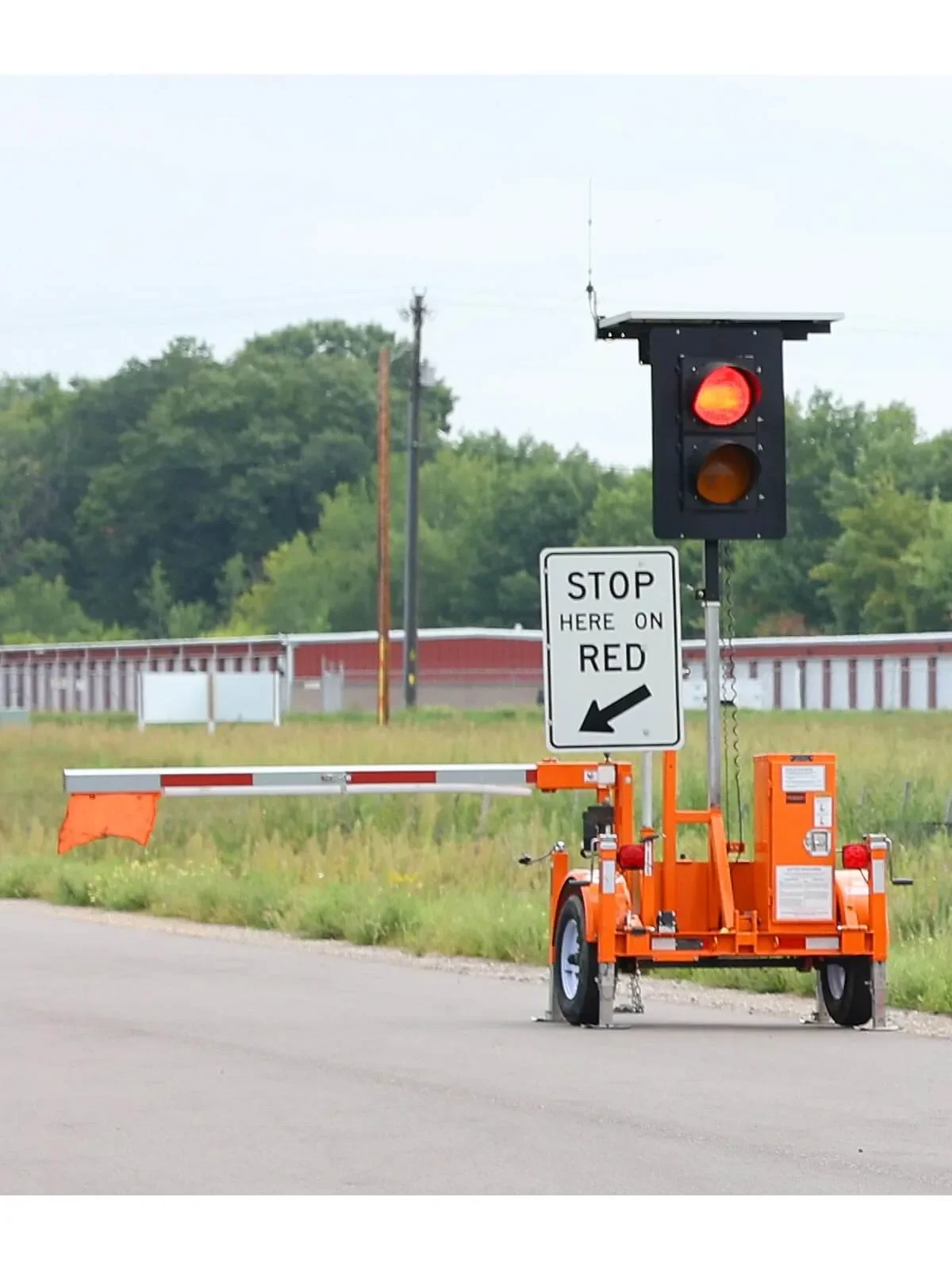
Automated Flaggers
Best Used For:
One-Lane Traffic Control: Controls alternating traffic when one lane is closed for construction or maintenance.
Long-Term Work Zones: Ideal for projects requiring traffic control for extended periods.
High-Traffic Areas: Useful where frequent vehicle movement makes manual flagging more difficult or hazardous.
Remote or Low-Staffed Work Zones: Provides traffic control where having a dedicated flagger may not be practical.
Benefits:
Improved Worker Safety: Reduces the need for employees to stand directly in or near moving traffic.
Consistent Traffic Control: Provides reliable and predictable stop-and-go signals for drivers.
Reduced Labor Needs: Can minimize the number of employees required for continuous traffic control, especially in unconventional or hazardous locations.
Increased Efficiency: Allows workers to focus on construction activities while automated equipment manages traffic.
Easy to Relocate: Equipment can be moved as the work zone changes, making it useful for mobile construction projects.